

Cementitious Materials

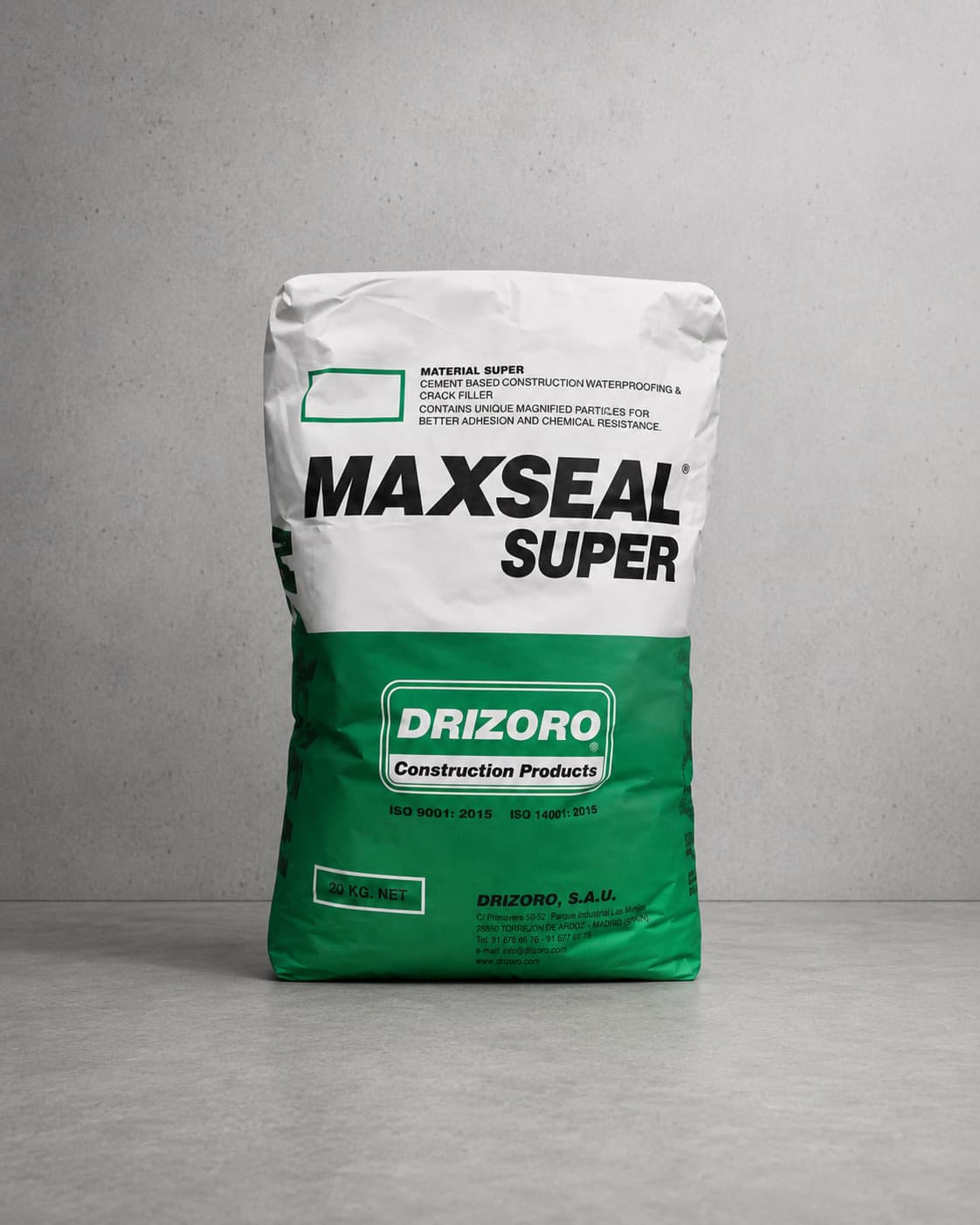
Concrete-compatible polymer-modified coatings for water tanks and wet areas.
Engineering application process
Substrate scarification, opening of concrete pores, and removal of honeycombing and laitance
Patching honeycombing and structural voids with high-strength non-shrink hydraulic mortar
Pre-wetting substrate and applying the first coat via brush or mechanical spray
Cross-directional perpendicular second coat after initial set to ensure pinhole-free coverage
Water curing cycle and watertightness hydrostatic verification prior to tiling or finish
Polymer-modified cementitious coatings that penetrate and bond crystallographically with concrete pores to create an integral waterproof barrier. The engineering standard for drinking-water cisterns, bathrooms, and wet areas due to potable-water safety and total substrate compatibility.
Applications
- Potable concrete water reservoirs
- Bathrooms, kitchens, and wet utility rooms
- Planter boxes and concrete pools
- Elevator pits and moisture-exposed slabs
Key advantages
- Potable-water safe and non-toxic
- Direct monolithic bonding without primer delamination
- Withstands positive and negative hydrostatic pressure
Request a site survey and a quote
Concrete-compatible polymer-modified coatings for water tanks and wet areas.